Good rentals in South Florida move quickly, and the applicant who's ready to hand over a complete file often gets the place. The best thing you can do before you even start touring is to assemble your paperwork. Here's exactly what to prepare.
Proof of identity
Landlords and associations need to confirm who you are. Have ready:
- A government-issued photo ID (driver's license, state ID, or passport)
- If you're not a U.S. citizen, a visa, work permit, or similar documentation may be requested
- Social Security number or ITIN, used for the background and credit check
Bring an ID for every adult who will be on the lease. In condo and townhome communities, each occupant over 18 often needs their own application.
Proof of income
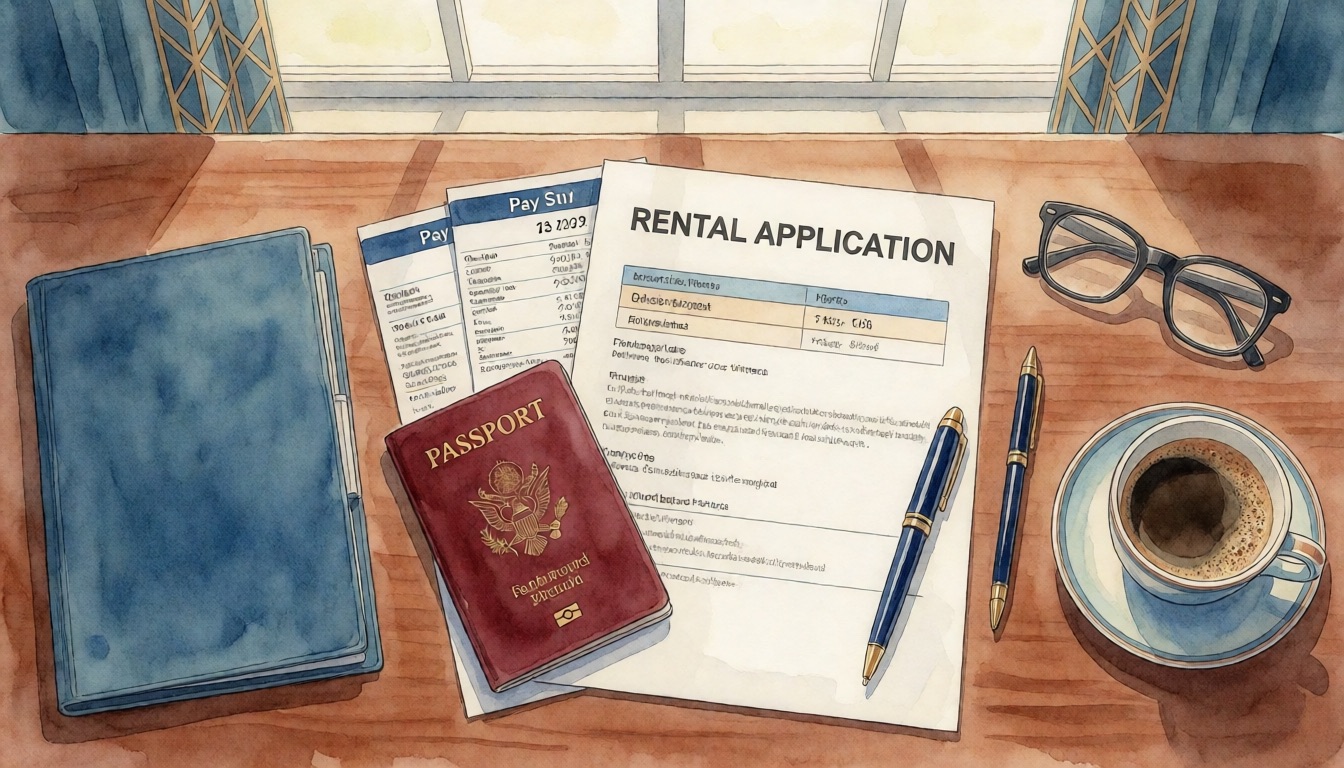
This is the heart of most applications — the landlord wants confidence you can comfortably cover the rent. Common ways to show it:
- Recent pay stubs (often the last two to three)
- An offer letter or employment verification if you're starting a new job
- Recent bank statements
- Tax returns or 1099s if you're self-employed or a contractor
- Proof of other income — retirement, Social Security, alimony, or investment income
Many landlords look for monthly income of roughly two-and-a-half to three times the rent, though this varies. If you're relocating and just starting work, an offer letter plus savings can help bridge the gap.
Rental history and references
Landlords like to see you've been a reliable tenant before:
- Contact information for current and previous landlords
- Proof of on-time payments, if you have it
- Personal or professional references
If you're a first-time renter, don't panic — a strong income, a co-signer, or an extra deposit can often stand in for rental history. Our first-time renter's guide to South Florida covers this in more depth.
Credit and background check
Most applications include your authorization for a credit and background check. You don't provide these yourself — you consent, and the landlord runs them. It helps to:
- Know your approximate credit score in advance
- Be ready to briefly explain any blemishes
- Bring a co-signer's information if your credit is thin or new
Not sure where you stand? What credit score you need to rent in South Florida covers the working thresholds and what tends to sink an application. If you're new to the US, renting in Florida without a US credit history explains what landlords accept instead.
Pet documentation
If you have a pet, gather this early — pet policies vary widely across South Florida communities:
- Vaccination and vet records
- Breed, weight, and age
- Any pet references or a "pet resume"
- Documentation for a service or emotional-support animal, if applicable
Some buildings have breed or size restrictions, and pet deposits or monthly pet fees are common.
For association-approved communities
Because so many South Florida rentals are condos and townhomes, the homeowners or condo association may require its own application on top of the landlord's — sometimes with a separate fee, background check, and even an interview. Ask early whether association approval applies so you can prepare that packet too. Our step-by-step guide to renting in South Florida explains how that second layer of approval works. For what the association application usually asks for, what it costs and how long it takes, see HOA and condo approval for renters.
A ready-to-go checklist
Pull these together before you start touring:
- Photo ID for each adult applicant
- Two to three recent pay stubs or income proof
- Recent bank statements
- Current and previous landlord contact info
- References
- Pet records, if applicable
- Funds ready for application fees, deposit, and first month's rent
Not sure how much to have ready? What it actually costs to move into a South Florida rental breaks down the one-off costs, and getting your security deposit back in Florida explains your rights when you move out.
This is general guidance, not legal advice. Requirements vary by landlord and community, and Florida rules can change — confirm what a specific property needs before applying. Florida's landlord-tenant rules live in Chapter 83, Part II of the Florida Statutes.
Ready when you are
Having your file organized turns a stressful scramble into a quick "yes." When you're prepared, you can browse current rentals and move fast on the right one. If you'd like a hand knowing what a particular Coral Springs or Deerfield Beach community expects, Eduardo Gil and the team are glad to help you get application-ready and find a place that fits.